Uterus
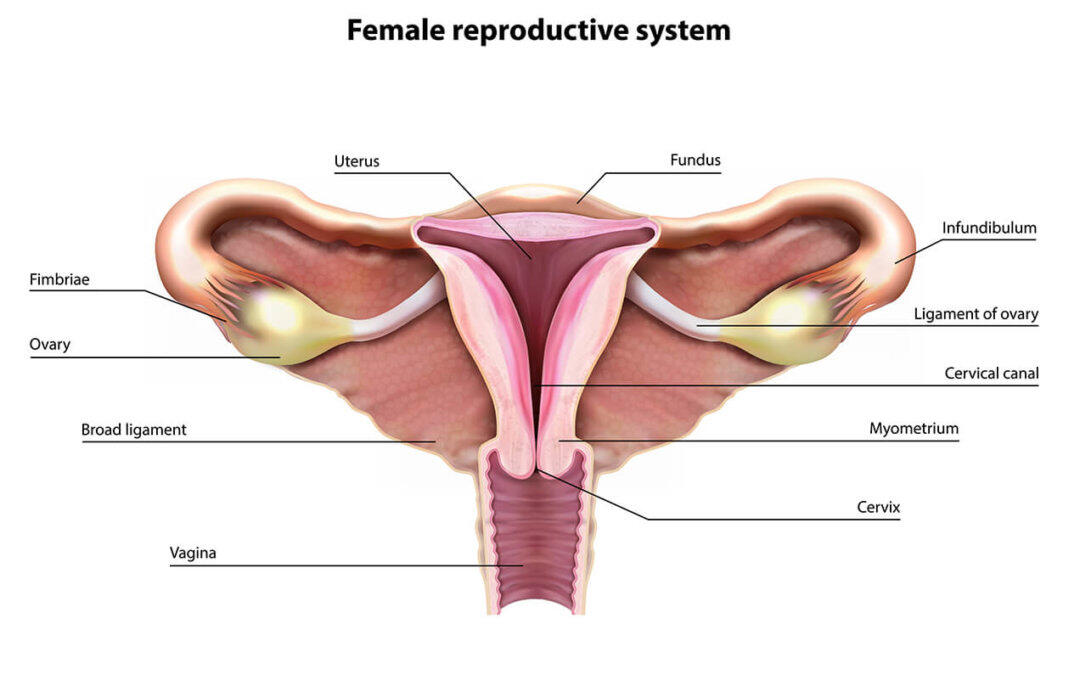
Hosts the developing fetusProduces vaginal and uterine secretionsPasses the anatomically male sperm through to the fallopian tubes
Ovaries
Produce the anatomically female egg cells.Produce and secrete estrogen and progesteroneThese parts are internal; the vagina meets the external organs at the vulva, which includes the labia, clitoris, and urethra. The vagina is attached to the uterus through the cervix, while the uterus is attached to the ovaries via the fallopian tubes. At certain intervals, the ovaries release an ovum, which passes through the fallopian tube into the uterus.
Vagina
The vagina is the female reproductive tract and has two primary functions: sexual intercourse and childbirth.
Vulva
The vulva is the external genitalia of the female reproductive tract, situated immediately external to the genital orifice.
Perineum
The perineum is the region between the genitals and the anus, including the perineal body and surrounding structures.
Female Duct System
The Fallopian tubes, or oviducts, connect the ovaries to the uterus.
Perineum
The perineum is the region between the genitals and the anus, including the perineal body and surrounding structures.
Mammary Glands
A mammary gland is an organ in female mammals that produces milk to feed young offspring.
Penis
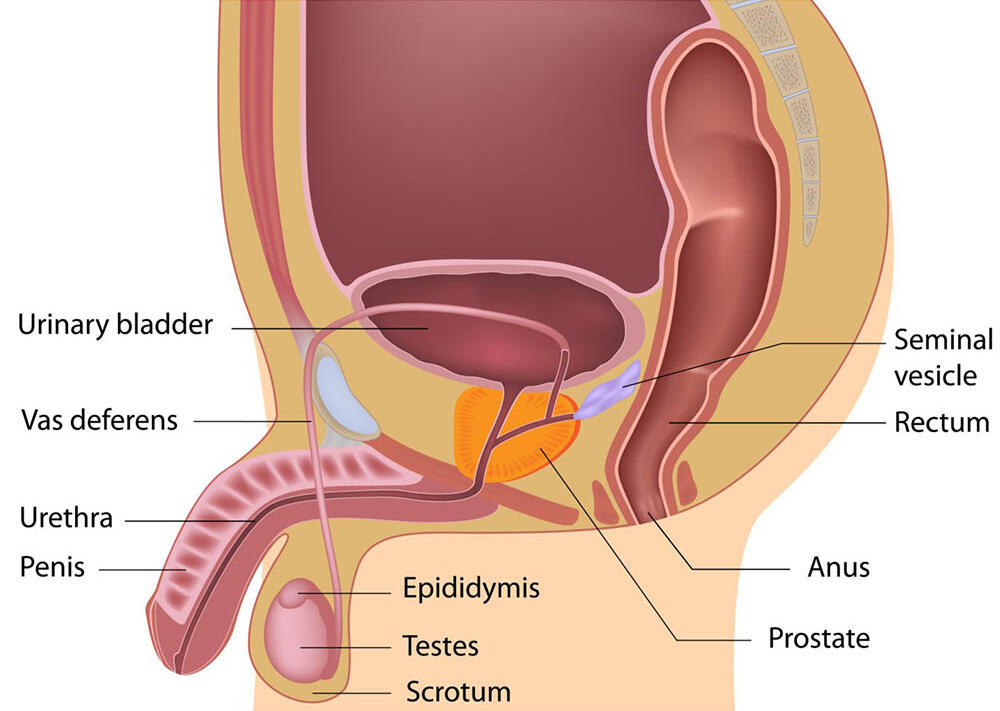
The penis is made up of two erectile cylinders (corpora cavernosa) that swell with blood during an erection. A tough, fibrous, partially elastic outer casing surrounds the two cylinders. Your urethra sits below the two cylinders and is surrounded by a spongy tissue (called the corpus spongiosum). If you’re uncircumcised, the head of the penis (glans penis) is covered by foreskin.
Urethra
The urethra (you-ree-thrah) is a tube that runs from your bladder to the end of the penis. It carries urine and semen from your bladder to the outside of your body. Your urethra is made up of two parts. The prostatic urethra is the part of the urethra that runs from your bladder through your prostate. The penile urethra is the part of your urethra that runs through the penis. A ring of muscle called the internal sphincter is located at the base of the bladder. When your internal sphincter closes, it stops urine leaving your body through the urethra. When you orgasm, this muscle ring closes tightly, to stop sperm passing backwards into the bladder.
Scrotum
The scrotum is a loose pouch of skin that hangs outside your body from your lower abdominal region behind the penis. Your scrotum holds your testicles in place, and helps to keep them cooler than your core body temperature.
Testes
The testes, or testicles, are a pair of egg shaped glands that sit in your scrotum, next to the base of the penis on the outside of the body. You need testicles for your reproductive system to work normally.
Epididymis
Your epididymis (ep-ee-did-ee-miss) is a thin, coiled tube that lies at the back of each testicle and connects the testicle to another single tube, called the vas deferens.
Bladder
The bladder is a muscular sac that stores urine. The bladder receives urine from the kidneys. When the bladder is full, urine is released into the urethra, the tube that carries the urine out of the body.
Rectum
The rectum is the final 20 cm strip of the large intestine. Bowel motions (faeces) are stored in the rectum before being passed out during a bowel movement.
Sperm
Sperm are male reproductive cells that contain the father’s genetic information (DNA) that will be passed onto his children. Each sperm takes about three months to mature. Mature sperm have a tail, allowing them to move inside the female reproductive tract to meet the egg (female reproductive cell).
Semen
Semen is the fluid that transports the sperm during ejaculation. During an orgasm, sperm are released from the epididymis, and are mixed with fluid released by the prostate gland and the seminal vesicles. This creates semen. The semen fluid protects and provides nutrients to the sperm.